


Before we proceed, we must address the objection that arrives like a reflex: That’s just how the world works.
Power dominates. The strong survive. Restraint is a luxury afforded only to those who’ve never faced real competition. This isn’t cynicism—it’s realism. It’s nature, history, truth. To suggest otherwise is to reveal yourself as naïve, sheltered, or willfully blind to how the game is actually played.
But here’s what needs saying clearly: observing that power often wins is not the same as discovering that power should win. Description is not justification. And the moment we confuse these two things—the moment we treat “is” as if it means “ought”—we’ve performed a trick of language that makes brutality invisible and dominance inevitable.
This is the moral alibi. And professional wrestling, perhaps more than any other American institution, shows us exactly how it works.
The Alibi Examined
Let’s be precise about what power realism actually claims.
It says: Look around. The ruthless get ahead. The nice finish last. Every system—political, economic, athletic—rewards those willing to do what others won’t. This pattern repeats across history and geography with such consistency that only a fool would deny it. Therefore (and here’s the move), restraint isn’t virtue—it’s weakness pretending to be principle.
Notice what just happened. We started with an observation (power often prevails) and ended with a moral conclusion (therefore power should prevail, and restraint is contemptible). That gap between “is” and “ought” got crossed without argument, as if the fact that dominance happens frequently proves that dominance is right.
But repetition doesn’t equal validation. Heart disease is common. That doesn’t make it healthy.
The power realist will object: “I’m not saying it’s good—I’m saying it’s real. You can wish the world were different, but I’m dealing with facts.” This sounds tough-minded. It isn’t. It’s surrender dressed as sophistication. Because the actual question isn’t whether power exists or whether it often wins. The question is: What do we do in response?
And here’s where power realism collapses into something uglier than mere observation. It doesn’t just describe dominance—it prescribes it. It tells you that since power exists, you’d better get yours first. That since betrayal is possible, trust is for suckers. That since someone might exploit restraint, restraint is tactical suicide. The “realism” becomes self-fulfilling: everyone acts as if dominance is inevitable, which makes dominance more likely, which confirms that dominance is inevitable.
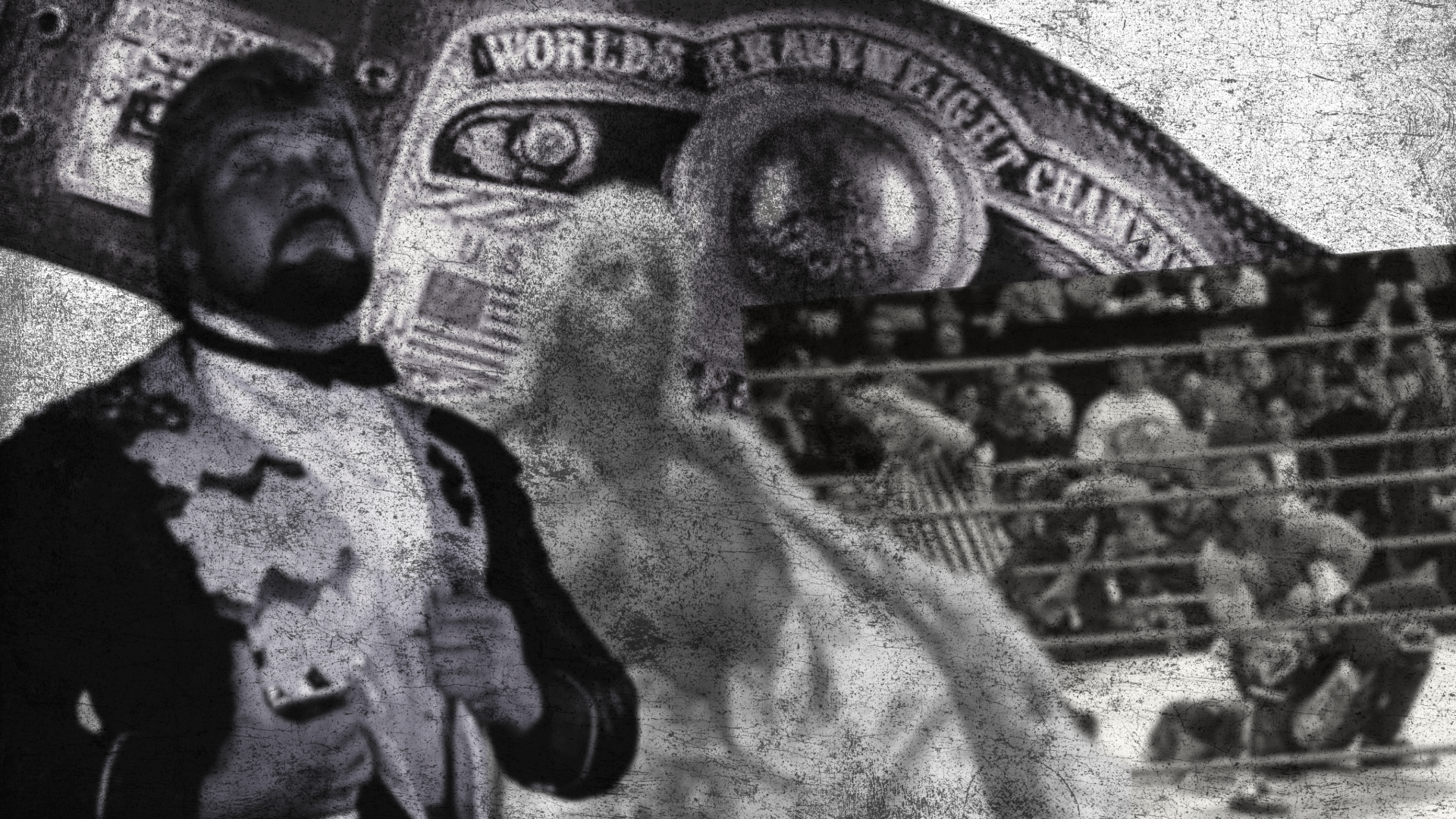
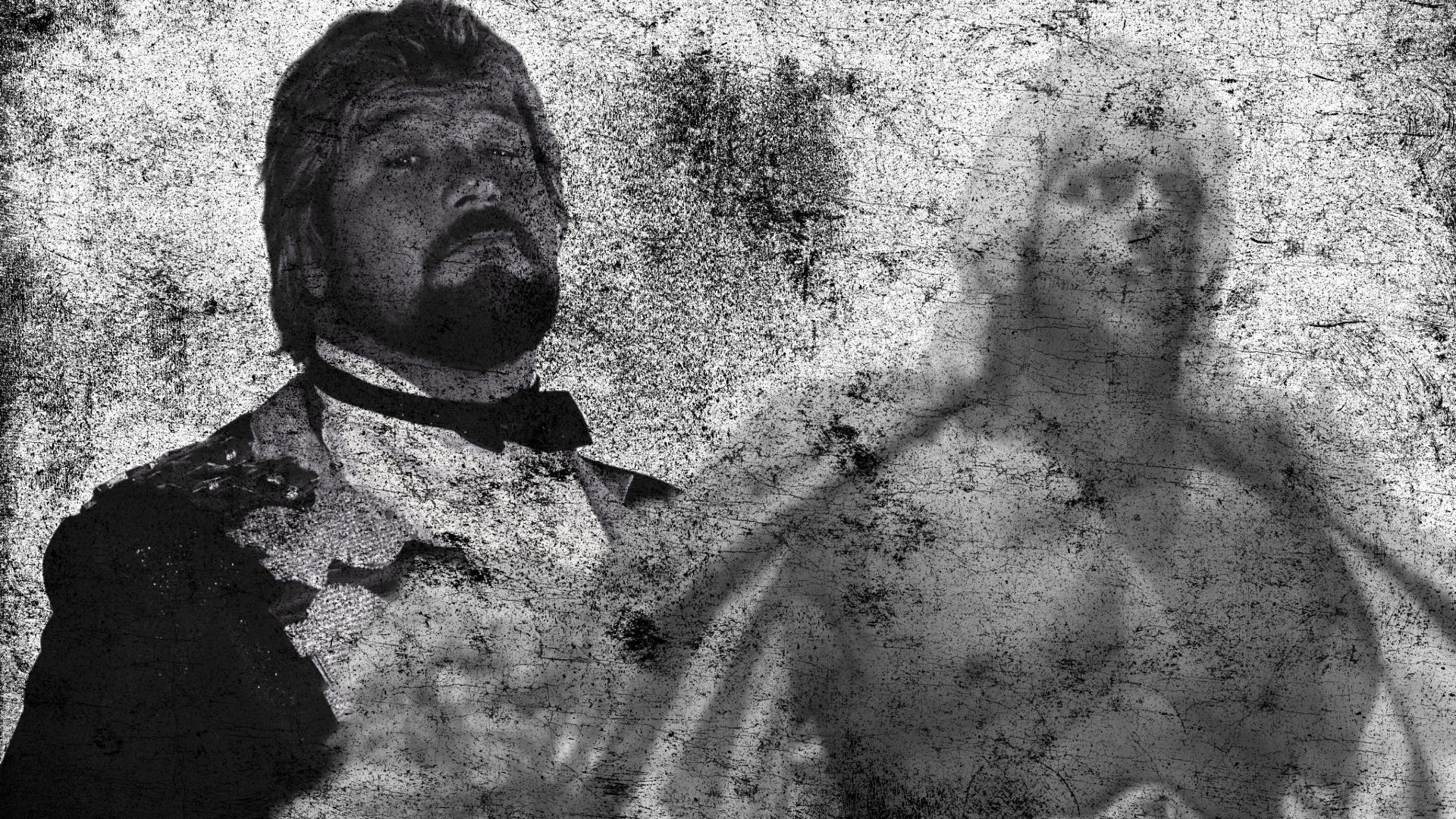
Professional wrestling understood this loop decades before game theorists gave it equations. Every “Nature Boy” Ric Flair promo about “paying the cost to be the boss,” every Million Dollar Man Ted DiBiase segment proving “everybody’s got a price,” every corporate heel faction cementing their control—all of it built on the same foundation: The world runs on power, so you might as well profit from it first.
And the audience—even as they booed—absorbed the lesson.
What Power Realism Actually Produces
If dominance is inevitable and restraint is naïve, certain consequences follow with mathematical precision.
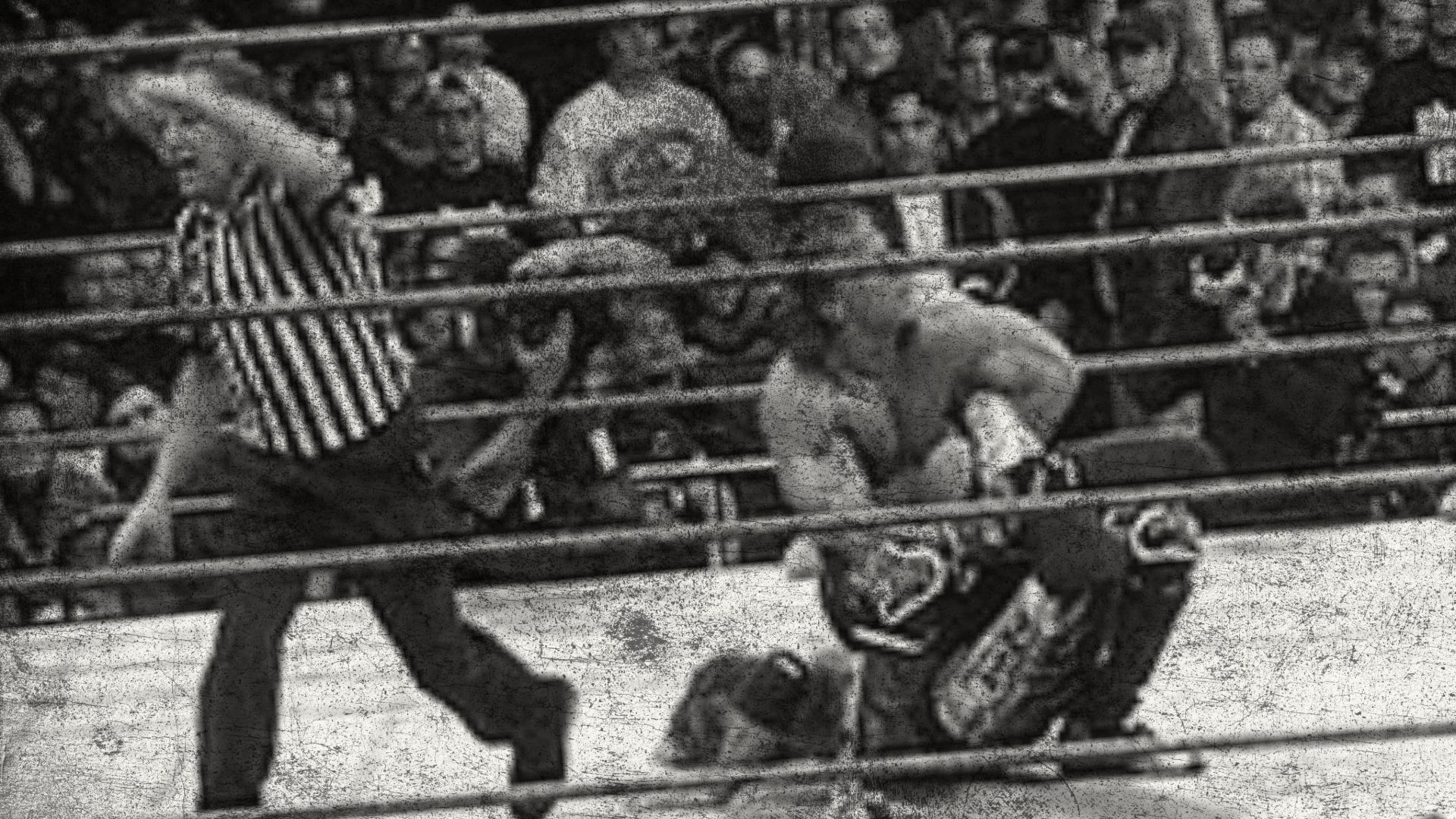
Consider Montreal. The 1997 Survivor Series, Bret Hart versus Shawn Michaels. Vince McMahon ordered the bell rung while Hart was in the Sharpshooter—a real double-cross in a worked medium. The fallout was seismic not just because it was a betrayal, but because it revealed what happened when someone with power felt that power slipping.
McMahon didn’t just book Hart to lose; he had to humiliate him, had to take control in the most public way possible, because letting Hart leave on his own terms would have felt like losing control entirely. Years later, when WWE built storylines around the “Montreal Screwjob,” they weren’t just mining drama—they were revealing the psychology of dominance itself. When control becomes identity, the thought of releasing it becomes unbearable.
This is what power realism produces: If everyone is always working everyone, then every interaction becomes threat assessment. Friendship is provisional. Partnership is temporary. Loyalty lasts exactly as long as it’s convenient. You can never rest, because the moment you lower your guard is the moment someone makes their move. When your identity is built entirely on dominance, defeat doesn’t just cost you a match—it threatens your fundamental reality. You become nothing.
So you hold tighter, you escalate, you turn a business decision into a personal war. This paranoid, exhausting, meaning-collapsing spiral is what we’ve been taught to call grown-up understanding of competition.
Hustle: The Most American Word
If you want to see the moral alibi in its purest linguistic form, look at the word hustle.
American culture has collapsed both meanings into a single term of praise. We celebrate “hustle culture” without asking which kind we mean. An entrepreneur “hustles” to build their business—are they working 80-hour weeks, or are they cutting corners and exploiting legal loopholes? A salesperson “hustles” for clients—are they providing genuine value, or running a long con? The athlete “hustles” on every play—are they maximizing effort within the rules, or looking for any edge including the illegal ones?
The genius of the word is that it makes these distinctions impossible to maintain. If someone succeeds, we call it hustle and mean it as a compliment—without examining how they succeeded. Success becomes its own justification. The method disappears into the result.
Professional wrestling named this explicitly—and then made it a selling point. Eddie Guerrero’s “Lie, Cheat, Steal” wasn’t presented as villainy to be condemned. It was his brand. Fans bought the t-shirts. Kids wore them to school. And the cognitive dissonance was supposed to be charming: yes, Eddie was breaking the rules, but he did it with such style, such creativity, such evident effort in his rule-breaking that somehow it became admirable.
The hustle was the point. Whether it was perseverance hustle (Eddie’s incredible in-ring work, his years grinding through injuries and addiction to get to the top) or predation hustle (the actual lying, cheating, and stealing in storylines) didn’t matter—the word hustle let us celebrate both without ever having to distinguish between them.
Silicon Valley ran the same playbook. “Disruption” and “move fast and break things” meant hustle—but by the time anyone asked whether that meant innovation or predation, success had already laundered the method.
Hustle lets us celebrate predation while pretending we’re celebrating virtue. It lets us admire someone’s dominance without asking whether that dominance required exploitation. It lets us say “that’s just good business” when we mean “that was legal but vicious.” It gives us plausible deniability about what we’re actually praising.
And when someone objects—when they point out that a particular success story involved substantial harm to others—the defense arrives instantly: “Don’t hate the player, hate the game.” Translation: dominance is the system, I’m just working within it, and your objection reveals you don’t understand how the world works.
The alibi is built into the language.
In wrestling, this reached its purest form with D-Generation X’s “Suck It” era. Shawn Michaels and Triple H weren’t positioned as heroes or villains—they were cool. They did whatever they wanted, broke whatever rules felt constraining, humiliated whoever got in their way, and the audience was supposed to admire the audacity. The message wasn’t “this is wrong”—it was “this is what winning looks like when you’re smart enough not to care about the pearl-clutching.”
Were they working hard (perseverance hustle) or being predatory (con-artist hustle)? The question was beside the point. They were over. The crowd popped. Success justified method, and hustle covered both meanings at once.
The Architecture of Paranoia
To understand why a promoter in 1997 would destroy his own champion on live television, you have to understand the ghosts he was fighting.
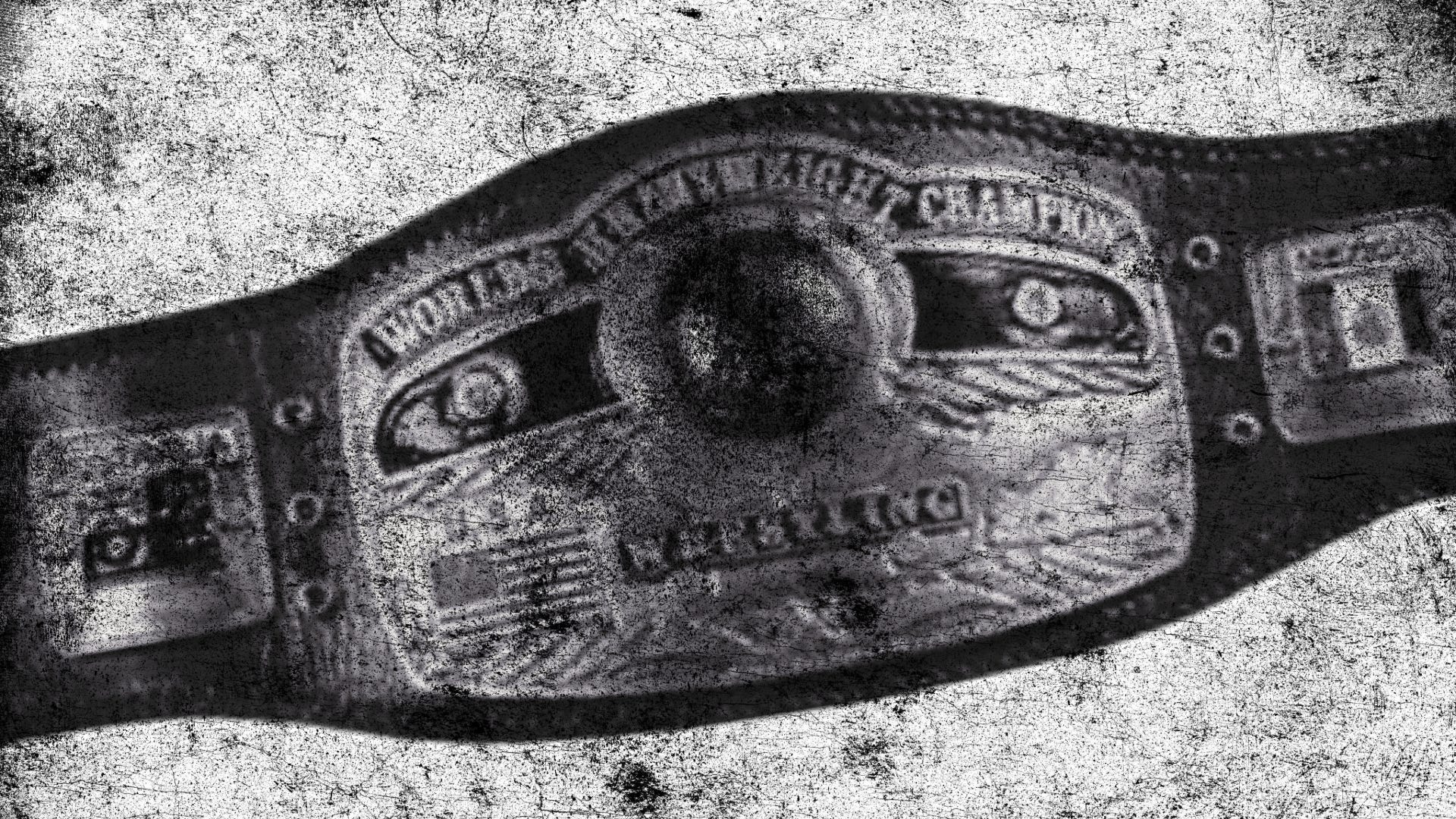
The belt Frank Gotch wore wasn’t just a trophy; it was the leverage. If you controlled the belt, you controlled the gate receipts. And because wrestling promoters knew their business was built on deception, they lived in terror that someone would deceive them.
This terror became reality in 1925. A promotional cartel known as the “Gold Dust Trio” decided to put the World Heavyweight Championship on Wayne Munn, a giant college football star who had a great look but couldn’t actually wrestle. They assumed the “code” of the brotherhood would protect him.
They were wrong. On April 15, 1925, during a match in Philadelphia, Munn’s opponent—the aging shooter Stanislaus Zbyszko (the same man Gotch had ambushed years earlier)—decided to flip the script. Zbyszko shot on the helpless football player, pinning him legitimately and stealing the championship for a rival promoter.
The industry learned a lesson that night that it never forgot: You cannot trust anyone with the belt unless you own them.
This paranoia birthed the National Wrestling Alliance (NWA), a cartel designed to prevent another 1925 double-cross. It birthed the system where champions were chosen not for their skill, but for their loyalty. And it birthed the World Wide Wrestling Federation (WWWF)—the precursor to WWE—which broke away from the NWA specifically because Vince McMahon Sr. refused to let a rival cartel control his champion.
So when Vince McMahon Jr. looked at Bret Hart in 1997, he wasn’t just seeing a Canadian hero refusing to lose. He was seeing the ghost of Stanislaus Zbyszko. He was seeing the structural flaw that had haunted the business for a century: if the champion leaves with the belt, the illusion collapses.
Montreal wasn’t an anomaly. It was the system working exactly as designed.
Why Power Realism Fears Restraint
If power realism were simply an observation about how the world often operates, it would be defensible as description. But watch what happens when someone demonstrates restraint in a high-stakes competitive environment.
The power realist doesn’t respond with indifference. They respond with hostility.
They call restraint: weakness, naïveté, virtue-signaling, privilege (implying that only those who’ve never truly competed can afford principles). They suggest that restrained people are either lying about their motivations or too stupid to recognize they’re being exploited. They treat restraint not as a different strategy but as a fundamental misunderstanding of reality—or worse, as a kind of moral fraud designed to make the restrained person feel superior.
This reaction is revealing. If dominance were truly inevitable, restraint would be irrelevant—a curious personal choice with no broader implications. The fact that power realists attack restraint with such vehemence suggests they understand something crucial: restraint is threatening.
Here’s why: If restraint is possible, then dominance is revealed as choice rather than necessity.
Every time someone faces competitive loss without collapsing into bitterness—every time an athlete maintains integrity after humiliation, every time a wrestler has their opponent beaten and chooses not to injure them—that moment proves dominance is not inevitable.
Which means every person who chose dominance could have chosen differently.
And choice can be judged.
This is the real threat. Power realism functions as a comprehensive alibi: “I had no choice, the world forced my hand, everyone does it, this is just reality.” Restraint destroys that alibi. It proves that in the same circumstances, with the same pressures, a different response was possible.
Suddenly the brutality isn’t inevitable—it’s preferred. And preferences reveal character.
Wrestling has always understood this tension, even when it doesn’t name it explicitly. The moment in a match where the heel has the face completely at their mercy—broken, defenseless, beaten—and the heel keeps going. The chair shot after the bell. The attack on an injured body part. The humiliation beyond what victory required. The crowd’s heat in these moments isn’t because they don’t understand that wrestling is predetermined. It’s because the story is revealing something that applies beyond the ring: when you build your identity on dominance, restraint becomes impossible even when victory is already secured.
But notice: that’s not an argument. That’s a threat. It’s not “you can’t restrain yourself”—it’s “you’d better not, because if you prove it’s possible, you’ll expose everyone who didn’t.”
It’s the sound of the alibi failing.
The Wrestling Lesson
Professional wrestling has spent over a century showing us what happens when dominance becomes the only recognized form of strength. Paranoia becomes plot structure. Betrayal becomes inevitability. Trust becomes the setup for the angle. And the audience—even as they cheer for the heroes who resist this logic—absorbs the deeper lesson: everyone’s working everyone, always.
This is what power realism produces when you build a world around it. Not clarity. Not strength. The inability to imagine that restraint might be real.
And if you can’t imagine restraint is real, you can’t choose it. You can’t even recognize it when you see it. Every act of integrity looks like either weakness or performance. Every moment of genuine restraint looks like someone who just hasn’t been tested yet.
This is the world dominance logic builds: one where virtue becomes impossible to perceive, let alone practice.
The question we’re asking in this series isn’t whether dominance happens. It does. The question is whether we have to celebrate it, justify it, and organize our entire understanding of strength around it.
Or whether—maybe—the real test of competition was never about dominating the opponent.
It was always about restraining yourself.
And if restraint is possible, then dominance stops being inevitable and starts being a choice that can be judged.
Which brings us to a framework that wrestling culture—and American culture generally—has spent generations trying to ignore: what if the strongest person in the room is the one who could dominate but doesn’t?
This post is a continuation of a series title The Second Opponent: Frank Gotch, Jesus Christ, and the American Confusion of Strength.
Previous: The Smile We Mistook For Strength
Next: The Reversal: Jesus, Meekness, and the Strength We Refuse to Recognize